Romeoville Epoxy Flooring has spent more than 20 years on epoxy flooring in Palos Hills and across the southwest suburbs, and this page is about one problem a showroom sample never shows: dry powder on a finished floor. Flour, salt and fine dust do not look like a spill, yet they change how a shoe meets a coating. We build the floor around that.
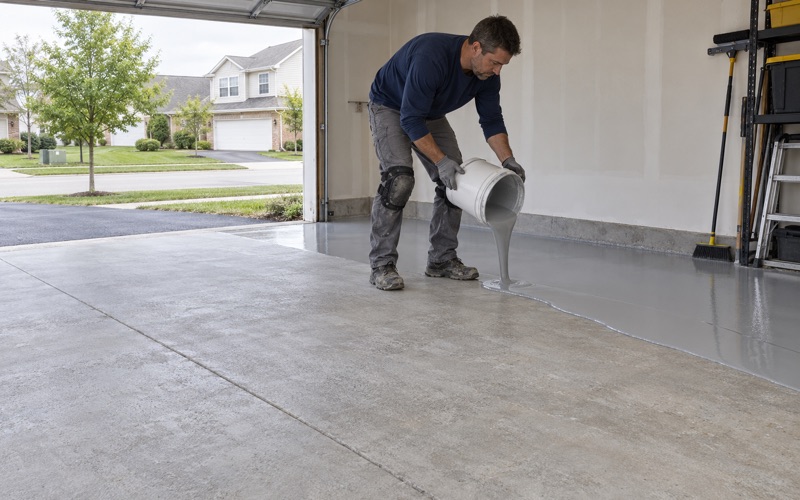
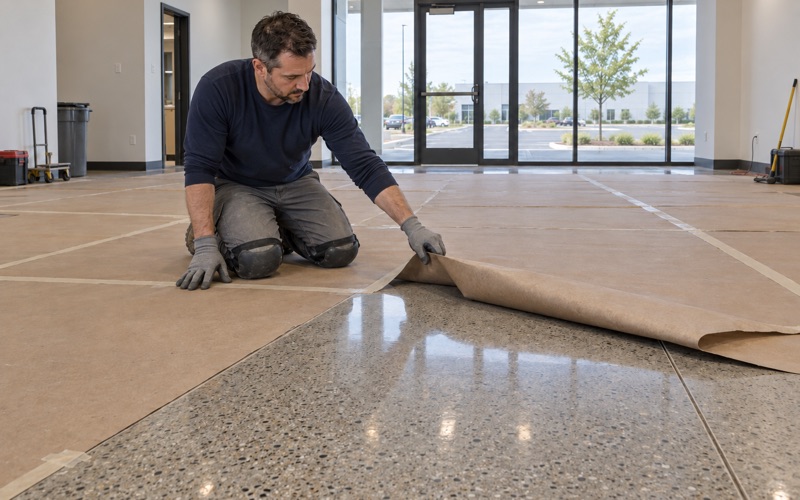
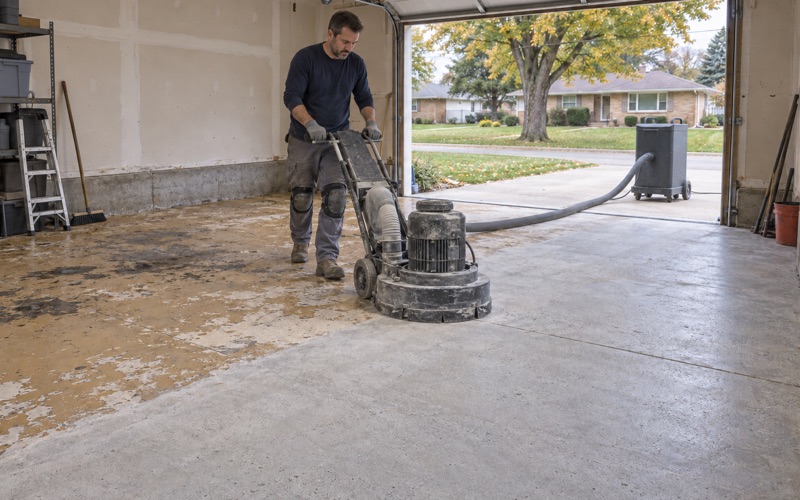
Most of the floors we quote here are garages, basements and small commercial rooms, and every one starts the same way. The slab is opened with a diamond grinder or shot blaster, never acid, and moisture testing is written into the scope as its own line. The proposal then names the product, the system build and the finished thickness, so the floor that goes down can be checked against the paper.
What changes from room to room is the topcoat and the cleaning plan. A bakery bench, a home baker’s basement table and a two-car garage each collect a different powder, and the finish that suits one can work against another. The sections below walk through why a glossy floor is the hardest case for dry contamination and how we set texture and cleanup to match.
A Laminating Bench on Harlem Avenue
Palos Hills has a pastry shop that shows the problem clearly. Cake ’N Bake sits in a strip mall at 10456 S. Harlem Ave., and NBC Chicago reported in August 2023 that its owner, Wasfia Shalabi, is a French pastry school graduate whose rolled croissants start as dough laminated with butter layers. We have no connection to the shop and have never seen its floor.
Flour at Every Fold
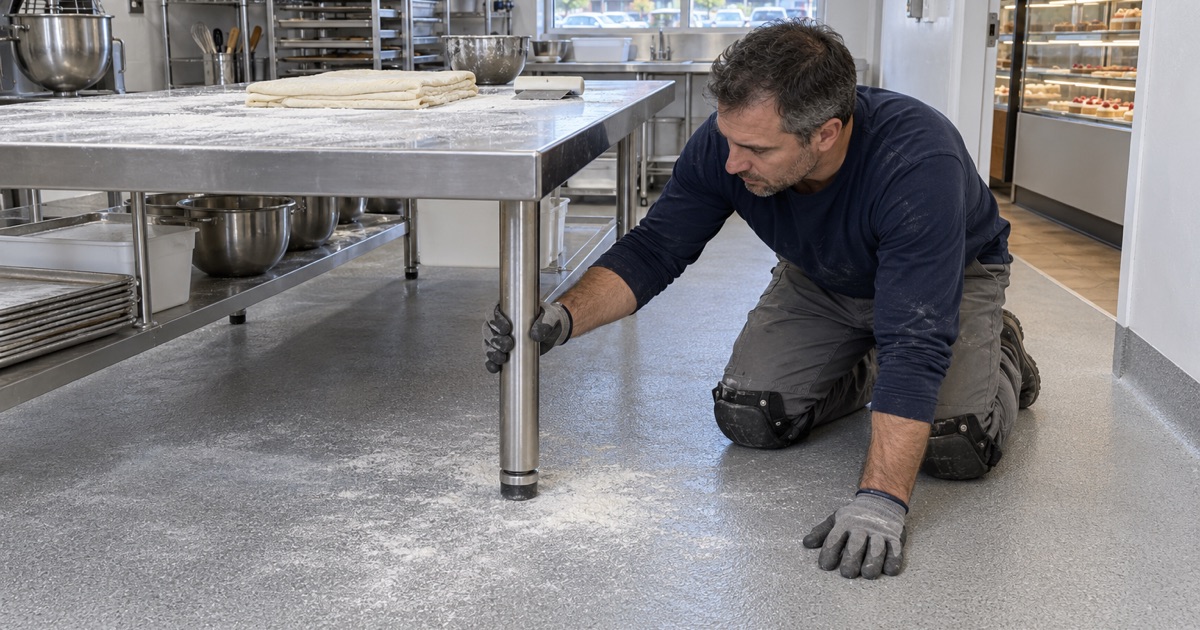
Laminated croissant dough and puff pastry are folded, rolled and sheeted again and again, and each pass is dusted with flour so the butter layers do not tear or stick. Some of that dusting drifts off the bench edge on every turn. Over a morning of production, a fine layer builds on the floor where the baker stands and along the path to the oven.
That layer is easy to underrate because it is pale, dry and thin. It does not pool like water or shine like grease, and on a light floor color it nearly disappears. The bench and the first few steps away from it are where the dust is heaviest, and they are also where people turn, pivot and carry trays.
The Same Pattern at a Home Table
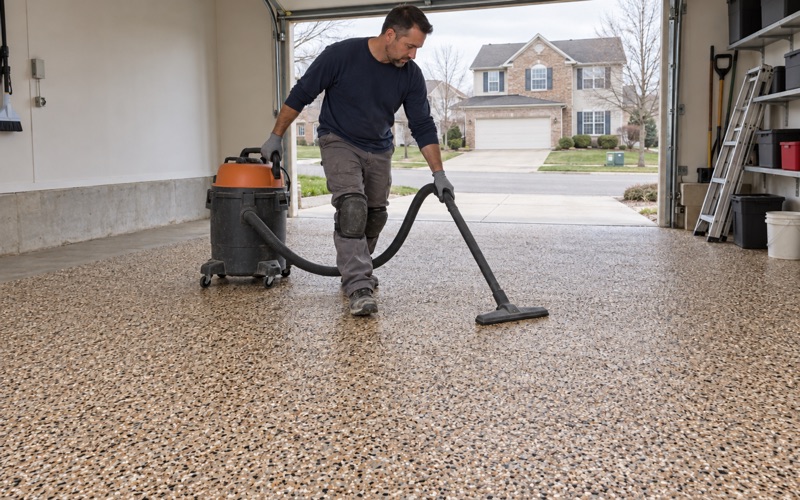
The pattern is not limited to commercial kitchens. Home bakers who keep a second prep table in the basement or a sheet-pan rack in the garage, especially around the holidays, put the same flour on those floors. A basement or garage slab coated for looks alone is often the glossiest floor in the house.
Those rooms also tend to have the least ventilation and the dimmest light, which is part of why a dusting goes unnoticed. A slab rolled with a shiny one-coat kit years ago is a common starting point, and that film usually has to be ground off before anything better can bond to the concrete.
Why We Start at the Bench, Not the Color Chart
When a customer describes a room like this, our first question is where the work happens, not which flake blend they like. We sketch the bench, the oven and the routes between them, because those lines decide where the texture goes and how the floor will be cleaned. The color and broadcast choices follow from that map rather than leading it.
Looking for epoxy-flooring closer to Hickory Hills? See Epoxy-Flooring Services in Hickory Hills.
Flour, Salt and Dust Are Slip Contaminants Too
Most people picture a slip as water, oil or a spilled drink. Research published in 2025 says dry particles deserve the same attention, and the finish many decorative epoxy floors are sold with makes them worse rather than better.
What the 2025 Research Found
A University of Arizona Health Sciences release from July 23, 2025, describing a paper in the Journal of Forensic Sciences, put it plainly: particles like salt, flour or dust can be just as dangerous as liquids. In the team’s test, a layer of iodized salt on porcelain tile so sparse it was nearly invisible reduced floor friction by 28%.
That figure belongs to salt on tile, and the researchers said they planned to test flour next, so we do not quote a number for flour. What the finding does establish is the direction of the risk: a dry, barely visible film can cost a floor a large share of its grip, and a bakery produces that kind of film all day.
Why a Glossy Finish Is the Worst Case
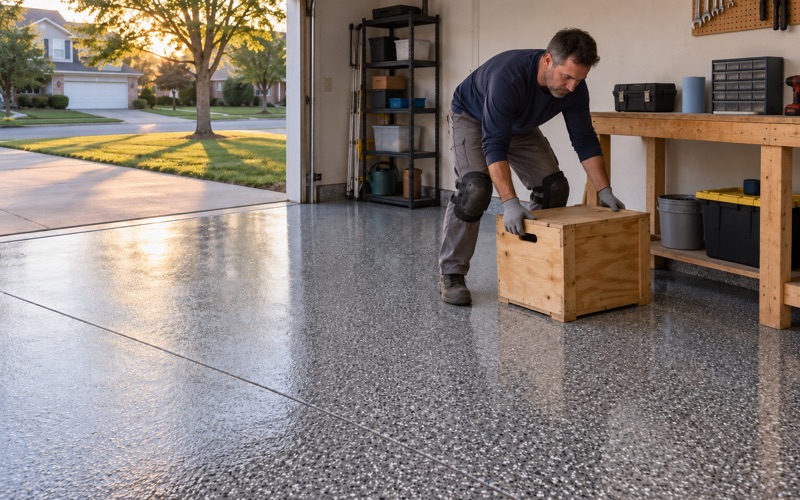
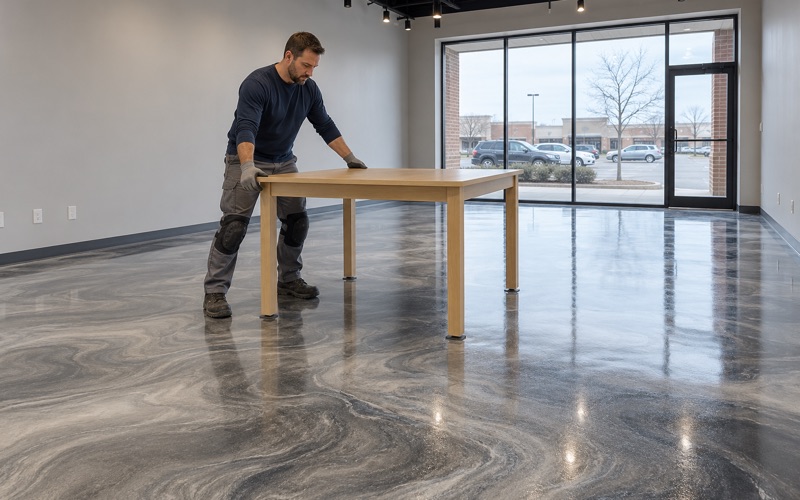
A high-gloss clear coat over a full flake broadcast is the floor most garages and showrooms want, and on a clean day it performs well. The trouble is that a smooth, hard surface gives loose particles nothing to settle into. Flour rides on top as a layer of tiny rolling grains between the sole and the coating.
A finish with fine texture behaves differently. The small peaks reach through a thin dusting to make contact with the shoe, and the valleys hold some of the powder below the walking surface. That does not make the floor immune to contamination, and we never promise a slip rating, but it moves the floor away from the worst case.
Salt and Grit in the Garage
The same logic carries out to the driveway. Rock salt and calcium chloride ride in on tires all winter, dry to a white crust and break into fine grains that sit on a garage floor much as flour does. Our garage systems are built to resist that brine chemically, and the texture question applies there just as it does at a pastry bench.
Grit from a winter of driving can also end up indoors when a garage doubles as an overflow pantry or a spot to cool sheet pans. Treating the garage floor as a working surface, with the same textured topcoat where people walk, keeps the dry-contaminant question consistent from the driveway to the kitchen door.
Texture Where the Bench and Walk Lines Are
Texture is a design decision, not a blanket choice. Too much of it everywhere makes a floor slow to clean, and too little leaves the busiest spots exposed. We place it where the feet and the flour actually meet.
A Fine-Texture Topcoat at the Work Zone
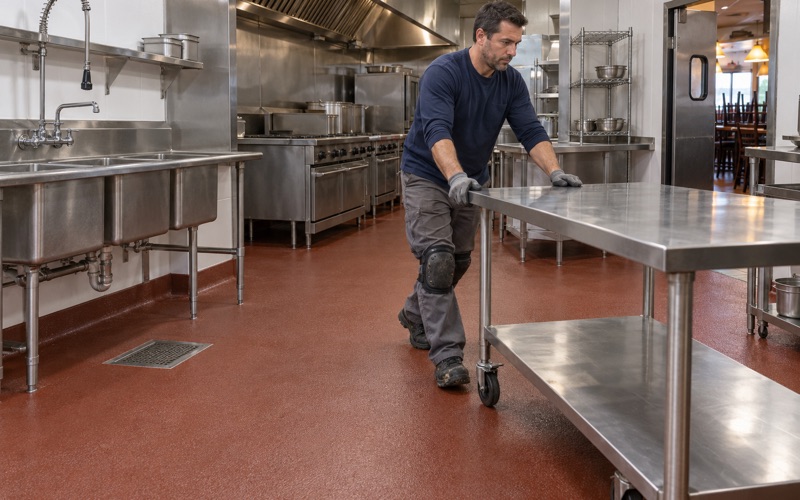
For a pastry room or a basement baking area we usually specify a fine aggregate in the final coat across the bench zone and the main walk lines. The texture goes into a polyaspartic or polyurethane topcoat and is sealed so it stays put under scrubbing. Away from those paths the floor can stay smoother and easier to wipe.
Quartz Broadcast for Heavier Rooms
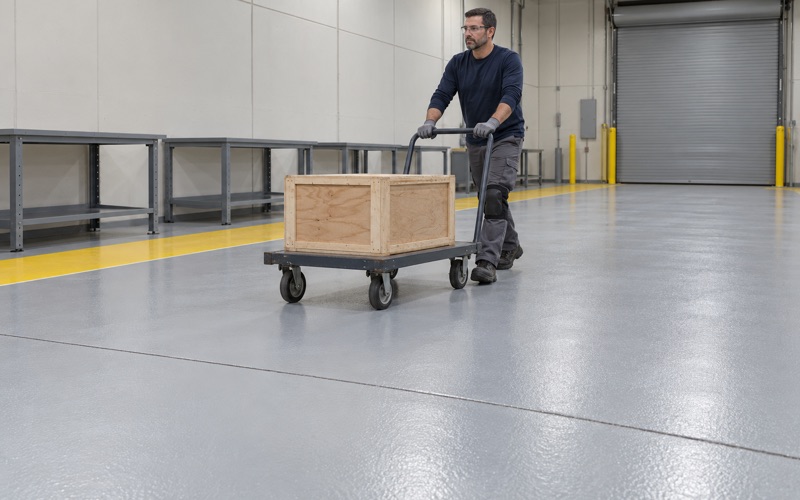
A commercial prep room with heavier traffic can justify a full quartz aggregate broadcast under the topcoat, which builds texture into the system rather than relying on an additive alone. The proposal states which approach we are using, what aggregate goes down and how many coats seal it, so the owner can check the finished floor against the quote.
For a food business, that system also has to pass plan review. In Palos Hills that review sits with the Cook County Department of Public Health, and we specify the floor so its finish, cove and cleanability are settled before the permit is issued rather than argued over afterward.
Matte Reads Cleaner Than Gloss
A lower-sheen topcoat also helps the person cleaning the floor. On a mirror finish, a fine dusting can hide in the reflection until someone steps in it; on a satin or matte surface a pale film of flour shows up against the color. We often suggest a mid-tone color for the same reason, since white flour vanishes on a white floor.
Preparing the Slab Underneath
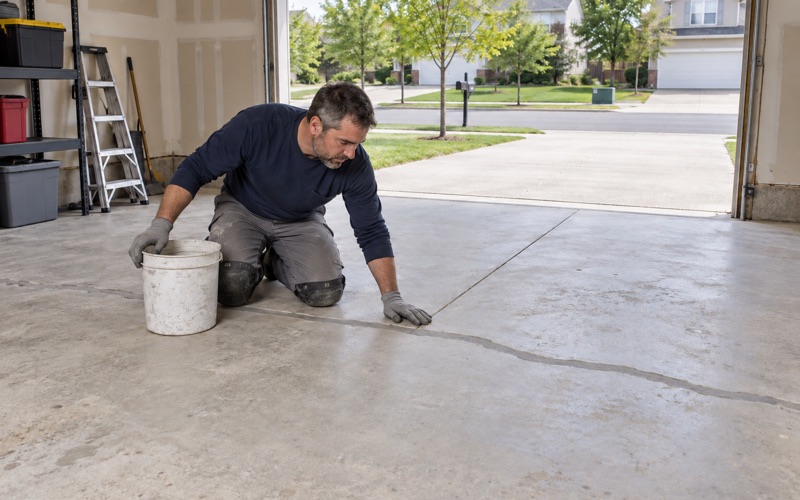
None of the texture matters if the coating lets go. Every slab is ground or shot blasted to a concrete surface profile that suits the system, and we read the cracks, joints and any old coating before quoting. If a slab needs repair or replacement before it can carry a coating, the quote says so.
Vacuum or Damp-Clean, Never Dry-Sweep Flour
The cleaning plan is half of the floor. A textured topcoat holds up its end only if the powder is lifted off rather than pushed around, so the routine is part of what we hand over.
Why the Broom Is the Wrong Tool
A dry broom pushes flour into the texture you paid for and throws the finest part of it back into the air, where it settles again on the bench and the floor. Trade guidance from Britain’s Health and Safety Executive, reported by British Baker in January 2026, says flour spills should never be cleaned by dry sweeping or compressed air. That is UK guidance, not a US or Illinois rule, but the reasoning travels.
The same guidance points bakers to an industrial vacuum of at least M class, or to wet cleaning methods, and names flour dust among the most common causes of occupational asthma in Britain. We treat that as sensible practice here: our cleaning sheet says flour is never dry-swept, and it says what replaces the broom.
A Cleaning Routine the Coating Can Take
Our handover sheet for a bakery or baking room is short: vacuum the loose flour first, then damp-mop with a neutral cleaner the coating maker approves, and let the floor dry before the next run of dough. A seamless resin floor has no grout lines to hold paste, so damp cleaning lifts the residue instead of packing it into joints.
Home Basements and Garages in Palos Hills
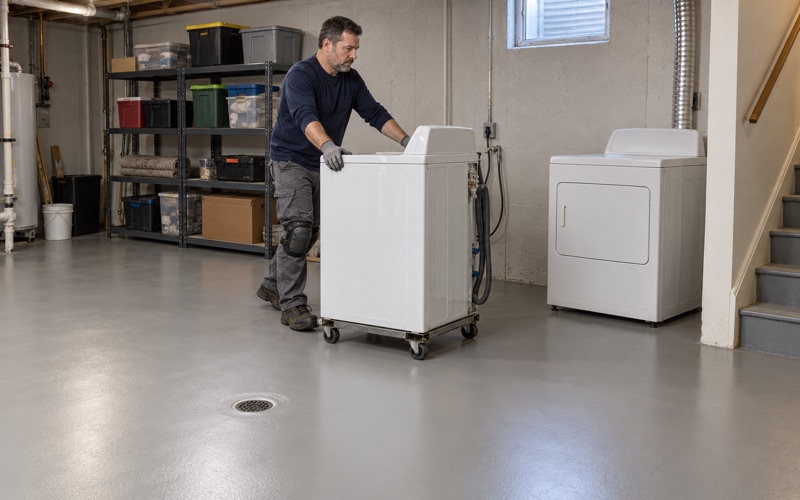
For a home baker’s basement, the order of work starts lower down. Roberts Road north of 103rd Street and the blocks from 103rd north to 99th Street have a record of flooding, so we look at where water could come from before discussing color. A coating is not waterproofing, and moisture testing comes before any primer.
For hired work, the City of Palos Hills Building Department registers contractors, and a general contractor posts a $25,000 surety bond good for two years along with a certificate of liability insurance. Illinois issues no state credential for flooring work, so we confirm that registration before a job is scheduled, and every home job comes with a written contract and the state’s consumer-rights pamphlet.
If you are planning a floor for a pastry room, a home baking space or a garage that catches winter salt, we will walk the room, test the slab and show you where the texture belongs. The written proposal names every layer, along with the cleaning routine that keeps it working.
- 20+ Years on Concrete
- Moisture Tested Before Quoting
- Per-Square-Foot Written Quotes