Romeoville Epoxy Flooring has installed epoxy flooring in Midlothian and across the south suburbs for more than 20 years, and training floors are where we have the most specific advice to give. A resin floor in a garage gym or a commercial fitness room takes foot traffic, rubber mats and daily cleaning well. A weighted sled dragged across it is a different load, and we plan the floor around that before anything is quoted.
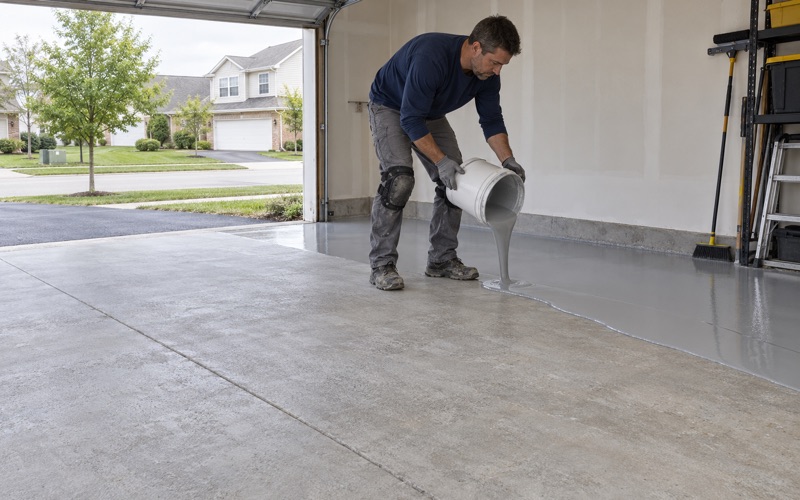
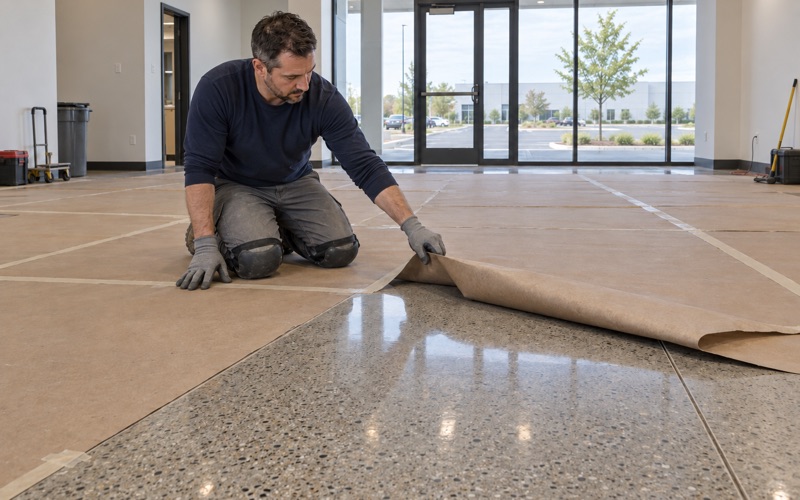
Our scope starts the same way on each slab we take on. We open the concrete with a diamond grinder or a shot blaster to a measured surface profile, never with acid, and we put moisture testing on the proposal as its own line rather than waiting for a blister to raise the question. The proposal also names the product, the system build and the finished thickness.
That last point matters more on a training floor than almost anywhere else. When an owner can see that a garage is getting a 100% solids epoxy base with a polyaspartic topcoat at a stated thickness, they can also see where that system stops and a turf lane takes over. A good gym floor is usually two materials working side by side, not one.
A 24/7 Midlothian gym and why a sled scrapes
The turf area at CFX Midlothian
CFX Midlothian, at 14726 S Cicero Avenue inside the village, advertises itself as Open 24/7 and lists about 20,000 square feet of workout space. Among its amenities is a Turf & Functional Training Area stocked with kettlebells, tires, slam balls, TRX cables and a weighted sled. We have not seen its floors, and the gym is not one of our customers.
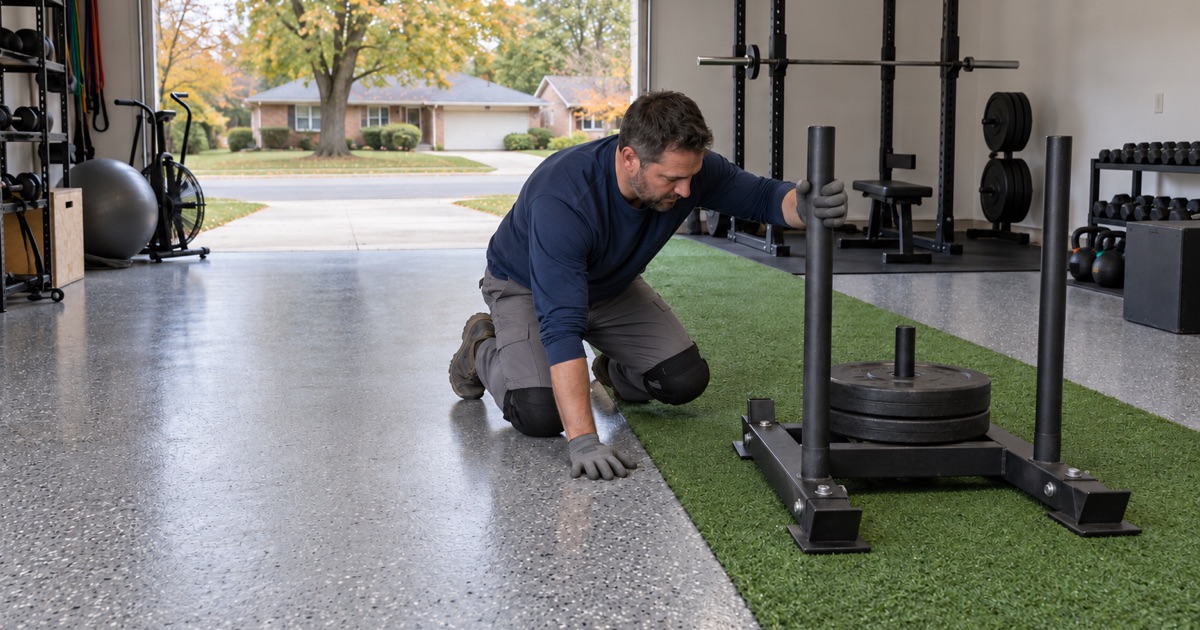
We cite it because it is the published place in Midlothian where sled work happens, and because the layout is telling. The sled lives on turf. That is the same arrangement the sled makers themselves describe, and it is the arrangement we recommend when a homeowner asks us to coat a garage that will also hold a push sled.
A dragged load, not a dropped one
Most of what goes wrong on a gym floor gets discussed in terms of impact. A sled is a different problem. Its skids stay in contact with the floor for the full length of the push, under the lifter’s full drive and whatever plates are stacked on the posts, so the load is a continuous scrape along one lane rather than a single hit in one spot.
Foot traffic spreads wear across a whole room and rarely goes deep. A sled concentrates it into a stripe a few feet wide, run after run, in the same direction. On a coated floor that stripe is where a topcoat dulls first, then scratches through toward the base coat, and no topcoat we know of is built to take it indefinitely.
Tires and carry frames count too
The same reasoning covers other dragged equipment. A plate-loaded tire hauled with a rope, or a farmer’s-carry frame set down and slid instead of lifted, puts a rough edge against the floor under real force. In a garage gym we plan those movements onto the same protected lane as the sled, so the resin only sees the loads it was chosen for.
Commercial gyms tend to solve this with zoning, and a home gym can borrow the idea at a smaller scale. Decide which movements drag, which carry and which stay in one place, then match each to a surface. The coating covers the places where people walk, stand and clean, and the scraping work stays where turf can absorb it.
Looking for epoxy-flooring closer to Country Club Hills? See Epoxy-Flooring Services in Country Club Hills.
What sled makers say about concrete
Steel skids belong on turf
VULCAN Fitness, describing its steel Tower Sled, says the steel finish ensures smooth use on artificial turf and then states plainly: DO NOT use on concrete. The same listing says a plastic strip on the bottom allows use on surfaces other than turf, still excluding concrete, and tells buyers to make sure the sled is used on turf with appropriate footwear.
That is manufacturer copy, not a lab test, but it is the clearest guidance available and it comes from the people who make the equipment. If the maker will not stand behind its sled on bare concrete, a thin resin film over that concrete is not a surface we would ask to carry it either.
Nylon and plastic sleds have limits as well
Spud Inc describes its nylon Magic Carpet sled as meant for turf, carpet and rubber or tile, and says it should not be used on concrete, asphalt or any rough textured surface. Other sellers offer sleds intended for hard surfaces, fitted with UHMW polyethylene or nylon skid pads, which are designed to slide rather than dig.
Those skid materials matter because they change the contact between sled and floor from metal on resin to plastic on resin. A smooth polymer pad glides where a steel runner bites, and it is less likely to drag a trapped stone across the surface. It still carries the full weight of the stacked plates, though, so the wear is reduced, not removed.
What that means for a resin floor
We read those listings as a ranking of risk rather than a set of permissions. Steel skids on a coated floor are the worst case. UHMW skids reduce the abrasion considerably but still wear a lane in over time, especially if grit gets under them. A sled pushed on its own turf lane takes the coating out of the question, which is why we start most gym conversations there.
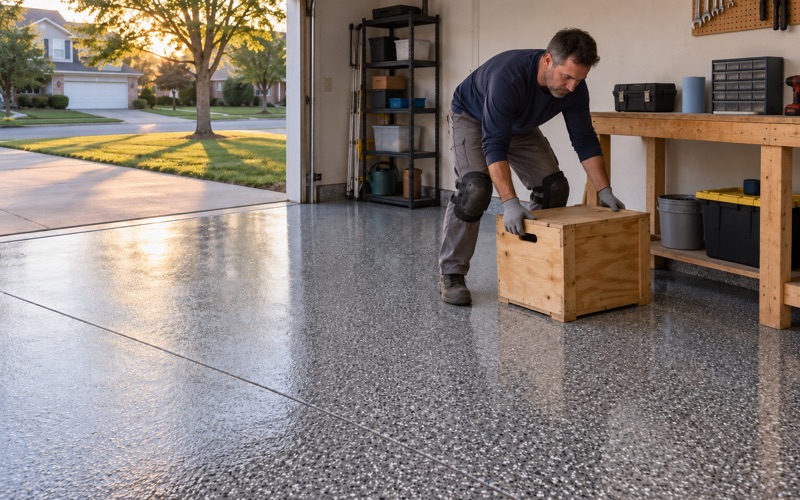
None of this makes a topcoat useless in a training space. Polyaspartic and polyurea topcoats resist scuffing and spilled sports drinks better than many floor finishes, and a quartz aggregate broadcast adds texture and body to the wear layer. They are still finishes, and we say so in writing before a training floor is sold.
Turf lanes, roll-out turf and plastic skids around a coated floor
A fixed turf lane
In a commercial gym or a large home training room, the cleanest answer is a permanent turf lane set into the floor plan. We coat the concrete around it and stop the system at a straight, clean edge where the turf begins, so the lane and the resin each do one job. A semi-rigid polyurea joint filler in the nearby slab joints keeps those edges from chipping under foot traffic.
Fixing the lane’s position before coating has a practical benefit. The turf edge becomes a planned termination rather than a patch cut into a finished floor later, and the proposal can show which square footage is coated and which is not. Pricing is per square foot for the system actually proposed, so the turf lane simply sits outside that number.
Roll-out turf over a finished floor
Rogue markets its GymTurf as roll-out turf that can sit over rubber, concrete or hardwood without damaging the surface underneath. That is manufacturer marketing rather than a test we have run, but the approach suits a two-car garage that has to park cars most of the week and turn into a training lane on a Saturday morning.
If roll-out turf is the plan, we finish the coating fully under where it will sit and let it cure on a schedule set by slab temperature and dew point, not the calendar. A topcoat that is still soft will mark under anything laid on it, and an unheated garage in a Midlothian winter may simply have to wait for spring.
Plastic skids when turf is not an option
Some owners have no room for a lane at all. For them the next step down is a sled with plastic or UHMW skids, used with the expectation that the path will need a fresh topcoat at some point. We would rather put that maintenance cost in front of the owner at the start than have it show up later as a worn stripe nobody expected.
Keeping that path clean is the other half of it. A pebble or a crystal of road salt carried in from the driveway and caught under a skid acts like sandpaper on the topcoat. A quick sweep of the lane before a sled session costs a minute and does more for the finish than any product choice we can make.
Commercial rooms around the turf
For a commercial fitness tenant, the same split applies at a larger scale. Locker areas, recovery rooms and reception floors take a resin system well because they see foot traffic, sweat and daily wet cleaning. We schedule that work around the hours the building has to keep running, including overnight and weekend windows, which matters for a gym that never fully closes.
A floor finished in sections lets part of the room stay in use while the next section cures. We sequence the grinding, coating and cure for each zone so that the turf area, which does not need us at all, can keep running throughout. That sequence goes in writing with the dates attached.
Garage gyms in Midlothian: where the sled goes and where the coating stops
Older slabs need reading first
Midlothian’s housing is mostly older stock. Census estimates show 81.3 percent of it built before 1980 and none counted as built since 2010, so a garage gym here usually means coating a slab that has been poured, patched and sometimes coated before. We read the cracks, joints and any old coating before quoting, and we say when a slab needs repair before it can be coated.
Moisture comes next. A garage with a training lane often has mats left down for weeks at a time, and moisture trapped beneath a coating is a common cause of blistering. We test the slab with ASTM F1869 calcium chloride kits or ASTM F2170 relative humidity probes, and moisture is the first warranty exclusion we read out before the job is sold.
Laying out the room
The layout question is simple to state. The sled lane runs along the longest clear wall, usually beside the parked car rather than through the middle of the bay, and it is turf, fixed or rolled. The rest of the floor gets the coated system, built for the calcium chloride brine and rock salt that come in on the tires in winter.
Drawing that plan on the proposal before work begins is what keeps a garage gym honest. The owner can see the coated area, the turf area and the reason for the boundary between them, and the finished thickness of the resin system is written beside it so it can be checked against what actually went down.
Village paperwork and scheduling
The Village of Midlothian’s Building Department at 14801 S Pulaski Road runs an annual contractor license, with a $10,000 bond and a liability certificate of at least $1 million naming the village, and the licenses expire December 31. Illinois licenses no flooring or coatings contractor, so we confirm those local rules before a job is scheduled rather than after.
Inspections there need one business day’s notice and run Monday through Friday only, which we build into the schedule when a project calls for one. Each home job also gets a written contract and the Home Repair: Know Your Consumer Rights pamphlet before work starts, as the Illinois Home Repair and Remodeling Act requires, and grinding dust is collected at the grinder rather than washed toward a drain.
- 20+ Years on Concrete
- Moisture Tested Before Quoting
- Per-Square-Foot Written Quotes