Romeoville Epoxy Flooring has installed epoxy flooring in Manhattan and the rest of Will County for more than 20 years, and some of the floors we think hardest about are the ones that change jobs overnight. A hall that seats a committee meeting on Tuesday and feeds a dinner line on Friday asks more of its concrete than either room would on its own.
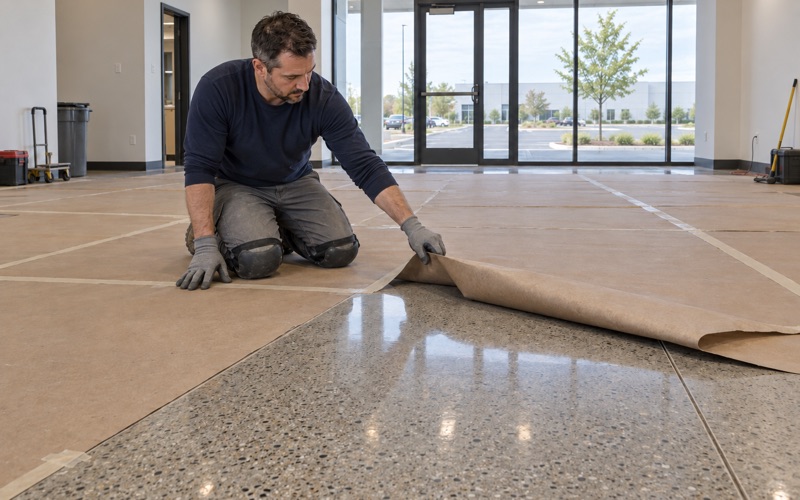
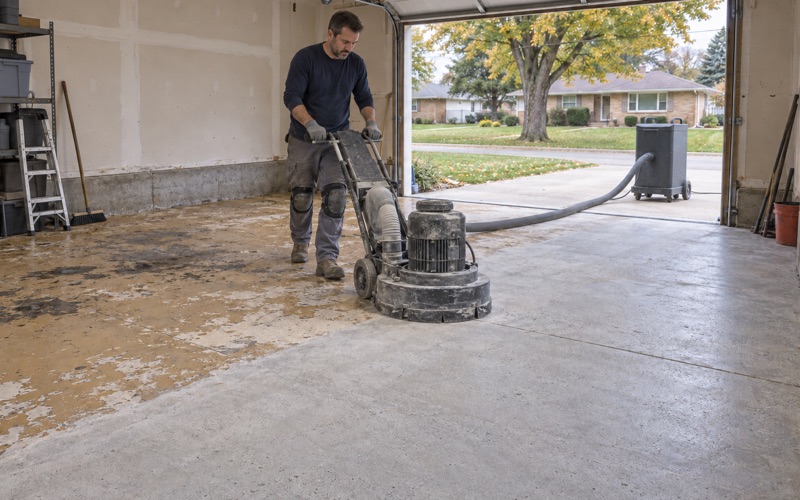
Our approach starts below the coating. Every slab is opened mechanically with a diamond grinder or a shot blaster, never with acid, and moisture testing is written into the scope as its own line item. On an older hall slab that test decides whether a moisture-mitigation primer goes down first, before anyone has paid for a floor that later blisters.
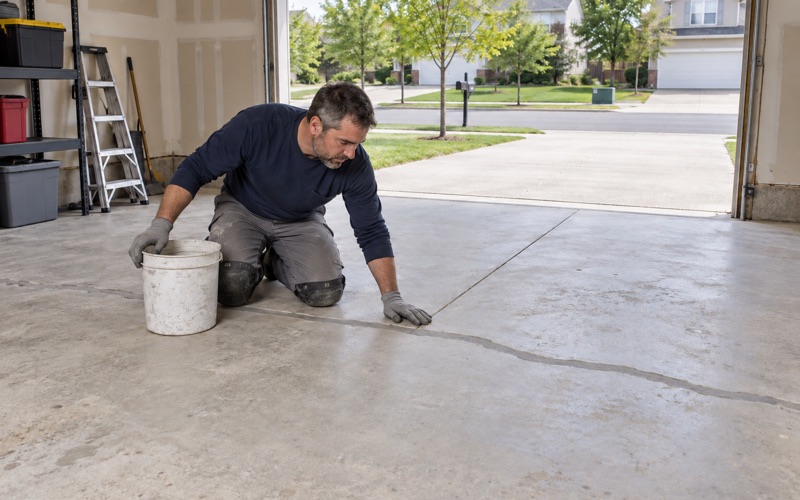
We also read cracks, joints and any old coating before we price anything, and we say so plainly when a slab needs repair before it can take resin. The written proposal names the product, the system build and the finished thickness, so a building committee can check what was quoted against what actually went down.
A Manhattan Church Hall on a Lenten Friday
Fish Fry Nights at 235 W. North Street
St. Joseph’s Church in Manhattan offered Friday fish frys through Lent 2026, from 4:30 to 7:00 p.m. through March 27, in the hall of the church at 235 W. North Street. Diners could eat in or carry out, and the parish’s own post put it simply: the fish fry is tonight in the church hall.
We have no connection to St. Joseph Parish and have not seen its hall, its kitchen or its floor. We point to it because it is the clearest local picture of a room that serves food a handful of nights a year and spends the rest of the calendar as a gathering space, which is the kind of floor this page is about.
A Room With Two Jobs
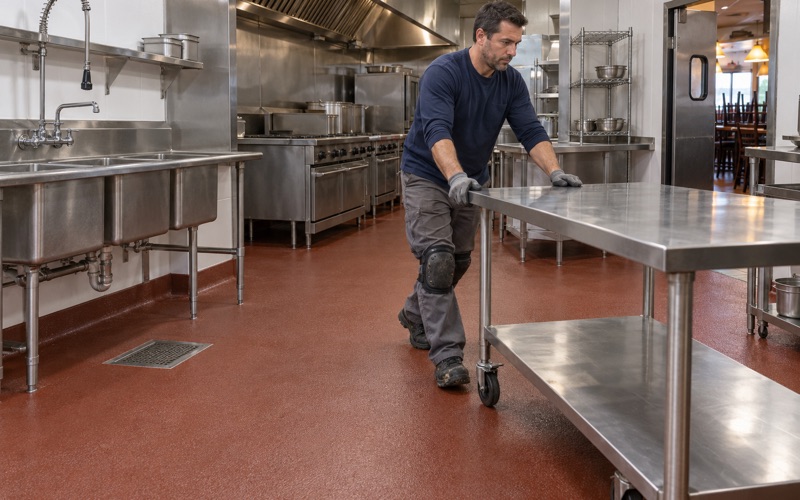
A restaurant kitchen floor is built on the assumption that grease arrives every day, and a meeting room floor is built on the assumption that it never does. A parish or community hall that hosts a fryer on Friday evenings through Lent sits between them: a few hours of oil and batter each week, then dining tables, dances and meetings on the very same surface.
That split changes the specification. The floor has to shrug off fryer oil without staining, clean down quickly with volunteer labor, and still look like a finished room when the tables are set for a funeral lunch or a school event. A bare or lightly sealed slab rarely manages all three.
A Campus With a Long Memory
Halls on an established campus tend to stay in service for generations. St. Joseph Catholic School, next door at 275 W. North Street, was established in 1925, and the village proclaimed 2025 a year of celebration for its 100th anniversary. Floors in rooms like these are expected to outlast several building committees, so the system matters more than the shine on day one.
Looking for epoxy-flooring closer to Minooka? See Epoxy-Flooring in Minooka.
What Will County Asks of a Food Event Floor
The Temporary Food Rules
The Will County Health Department’s Environmental Food Safety program conducts plan reviews, openings and routine inspections at food service, stores and temporary food events in the county. Its Technical Release No. 4.0 places fried foods in the medium-risk temporary permit category at $90 per event, and non-profit organizations, schools, churches and government units are charged 50 percent of the applicable fee.
The application and fee are due at least seven days before the event, with a menu and a booth layout that shows the floor construction, and an inspection comes before operation. The floor language is direct: a booth floor must be a hard surface or canvas, and floors in the food preparation area shall be well drained concrete or asphalt.
Where a Coating Fits, and Where It Does Not
When concrete is not feasible, the release allows a temporary floor of wood or canvas, with wood freshly painted so it is smooth, easily cleanable and nonabsorbent. A sealed resin floor sits comfortably in that spirit, but a floor coating does not by itself satisfy the health department. The inspector judges the whole operation, and the floor is one part of it.
Whether a hall with a permanent kitchen runs its fish fry under a temporary event permit or a fixed food permit is a question for the organizer and the county, not for us. For restaurants and other food businesses, we specify the floor for Will County Health Department food plan review before the permit is issued, so the floor is settled on paper first.
Registering With the Village of Manhattan
Illinois issues no state license for flooring or coatings work, so we confirm each village’s own rules before a job is scheduled. The Village of Manhattan requires every general contractor and subcontractor working inside its corporate limits to register, at $150 and $100 respectively, renewed yearly, with a certificate of insurance naming the village. The village no longer requires a permit bond.
Its online permit page names decks, fences, patios and sheds, and says all other permit types go by application. Floor coating is not named either way, so we ask Building & Zoning at 815-418-2042 before the work starts rather than guess.
Oil, Batter and Same-Night Cleanup
Where the Oil Lands Around a Fryer
Around a fry station the mess follows a pattern. Oil drips from baskets as they come out of the fryer, batter and breading flour land around the dredging table and turn to paste when they get wet, and every volunteer walking from the fryer to the serving line carries a thin film of grease a few steps further across the room.
On bare concrete that oil does not stay on top. It wicks into the pores, darkens the slab in a halo around the fryer, and keeps coming back after every scrubbing. A floor that has absorbed several seasons of fryer oil is also harder to coat later, because resin will not bond to oil-soaked concrete.
Building a Floor for Hot Oil
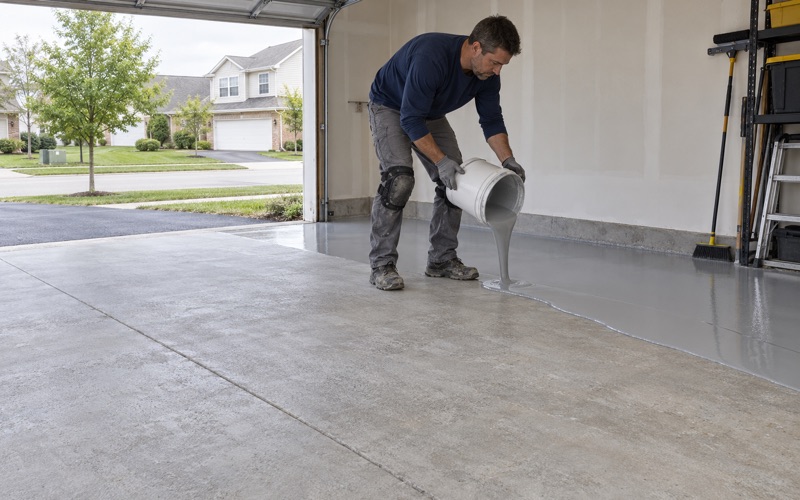
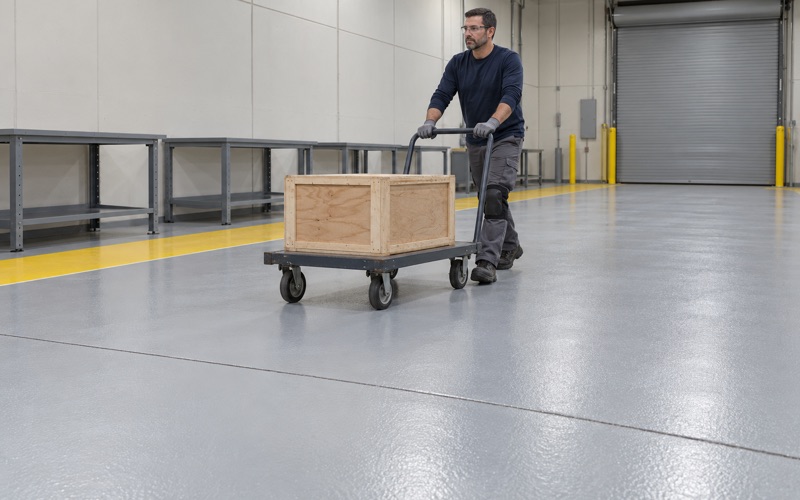
For a hall that hosts a fryer, we usually build from a diamond-ground profile in the ICRI CSP range the system calls for, then a 100% solids epoxy body coat and a polyaspartic or polyurea topcoat that is nonabsorbent and easy to wipe down. Where a fryer stands, urethane cement is worth pricing, because it tolerates heat and hot oil better than standard epoxy.
A coved base where the floor meets the wall keeps oil and mop water out of the corner seam. Before any of it goes down, we test the slab with ASTM F2170 in-situ relative humidity probes or an ASTM F1869 calcium chloride test, because an older hall slab may have no vapor retarder under it at all.
Same-Night Degreasing by Volunteers
Fish fry crews are volunteers, and they want to go home once the last carry-out order leaves. On a sealed floor the oil stays on the surface, so a degreaser, hot water and a squeegee toward the drain can take the fry station back to clean the same night, instead of a scrubbing session the next morning before the hall is needed again.
Before the floor goes into service, it is worth settling which degreasers suit the topcoat and which solvents stay off it. A harsh cleaner left to dwell can dull a finish faster than the oil it was meant to lift, and a volunteer crew changes from year to year, so the answer belongs on paper.
Turning the Hall Back for Dining, Meetings and Events
The Morning After a Fry
The day after a fish fry, the same floor carries round tables, folding chairs, a dance floor or a meeting. Chair feet and table legs scuff a high-gloss finish, so the topcoat and color are chosen for a room that looks finished under banquet lighting rather than for an industrial shop.
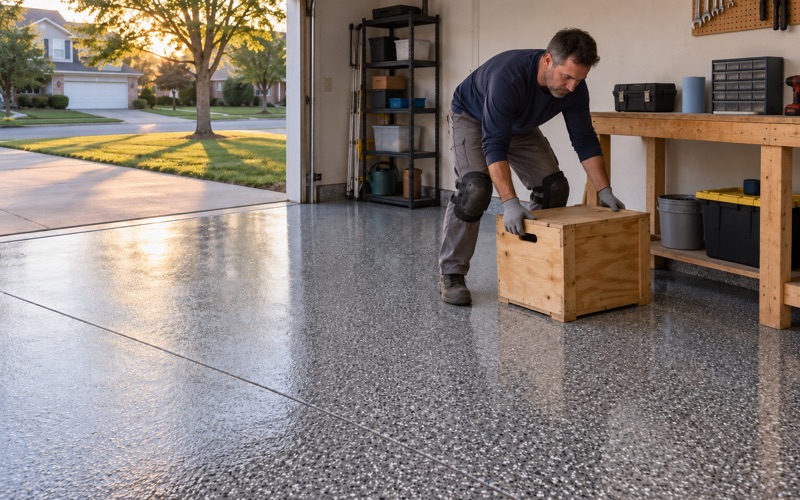
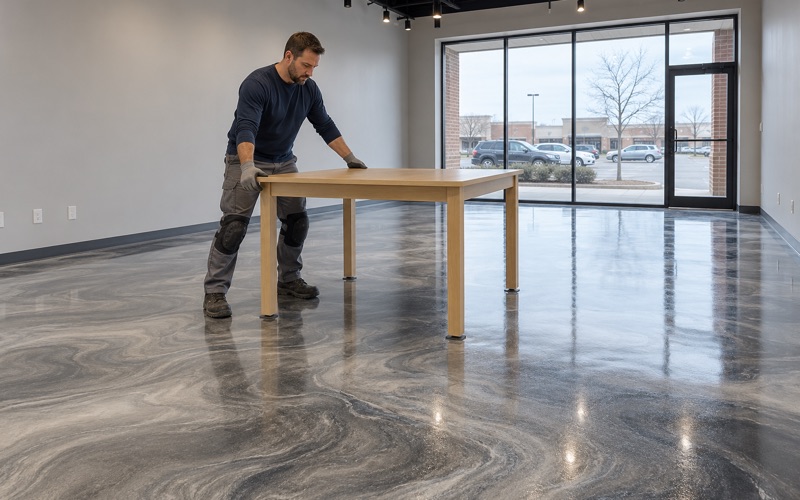
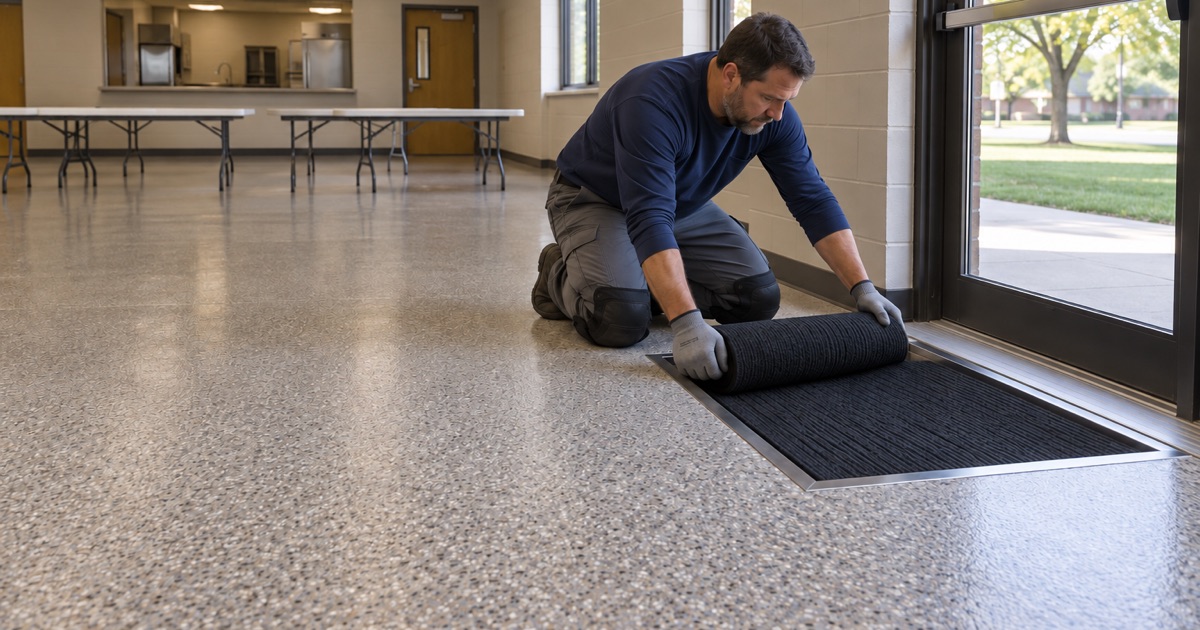
A vinyl flake broadcast is one way to do that. The flake gives the floor a terrazzo-like look in a dining room and hides the small marks of a busy season, while the clear topcoat over it takes the fryer oil. A solid color can work too, though it shows wear sooner in a high-traffic hall.
Scheduling Around a Hall’s Calendar
A hall that hosts a Lenten fish fry, then weddings, funerals and school events, rarely has a long empty week. We schedule work around the hours a building has to keep running, including overnight and weekend windows, and the obvious time to redo a fry-station floor is after the season ends rather than between two Fridays.
Curing is timed against slab temperature and the dew point spread at the surface, not the calendar. A cold hall in late winter can stall a cure, and amine blush on an epoxy coat laid in damp, cool air weakens the bond of the topcoat that follows. We would rather move a date than shorten a cure.
What the Proposal Spells Out
Our proposals are priced per square foot for the system actually proposed, not from a national average, and the warranty exclusions are read aloud before the job is sold, with moisture named first. Grinding dust is collected at the grinder and never washed toward a floor drain or a storm inlet, which matters in a hall where the kitchen drain is a few steps away.
Coatings are chosen within the Illinois limits on VOC content under 35 Ill. Adm. Code Part 223, which bind the installer as well as the manufacturer. For a building committee, that leaves one document that says what goes down, how thick it is, and what the warranty does not cover.
- 20+ Years on Concrete
- Moisture Tested Before Quoting
- Per-Square-Foot Written Quotes