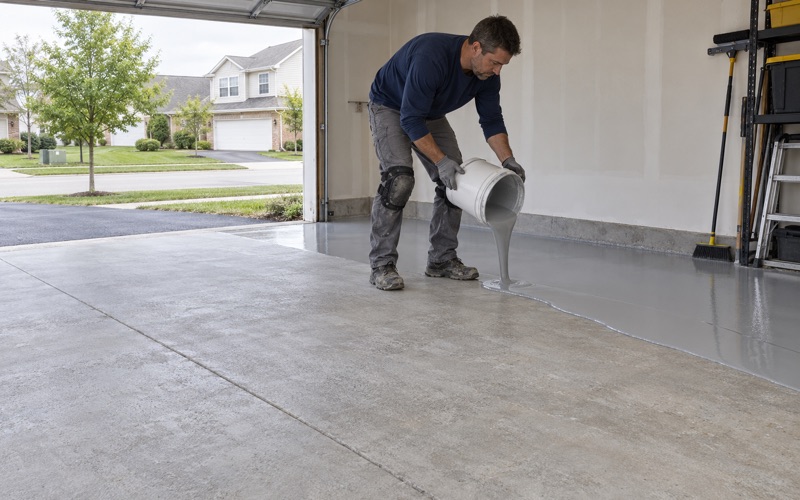
Romeoville Epoxy Flooring installs epoxy flooring in Justice garages with one fact made plain before the quote: the coating begins with an empty room and ends only when the cure says your belongings can come back. After more than 20 years of floors, we have learned that the logistics of that stretch decide how smooth a job feels far more than the color chart does.
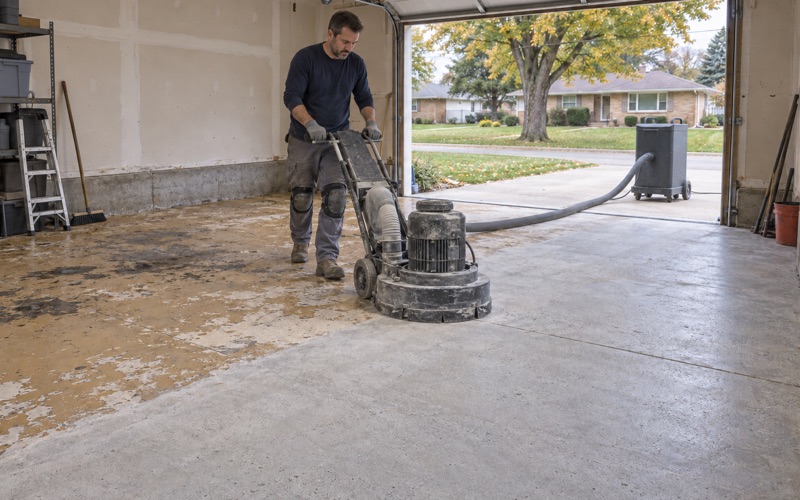
Our part is the floor itself. We open the slab mechanically with a diamond grinder or shot blaster, never with acid, test it for moisture as a priced line in the scope, and write the product, the system build and the finished thickness into the proposal. Your part is a garage with nothing left on the concrete, and a plan for where everything lives until it can return.
This page walks through that plan in order. It covers what has to leave, how long each cure stage runs, the realistic places a garage’s contents can wait, and the short list of things no rented unit will accept. None of it is complicated, but each piece is easier to arrange a week ahead than on the morning our crew pulls into the driveway.
Emptying the Garage Comes Before Any Grinding
Why every item has to leave
A grinder works wall to wall, and the coating has to run under where the shelves stood, not around their feet. Anything left in the room collects fine dust even with collection at the grinder, and anything stacked in a corner leaves a patch of bare concrete we would have to come back for. So the floor is cleared completely, corners included.
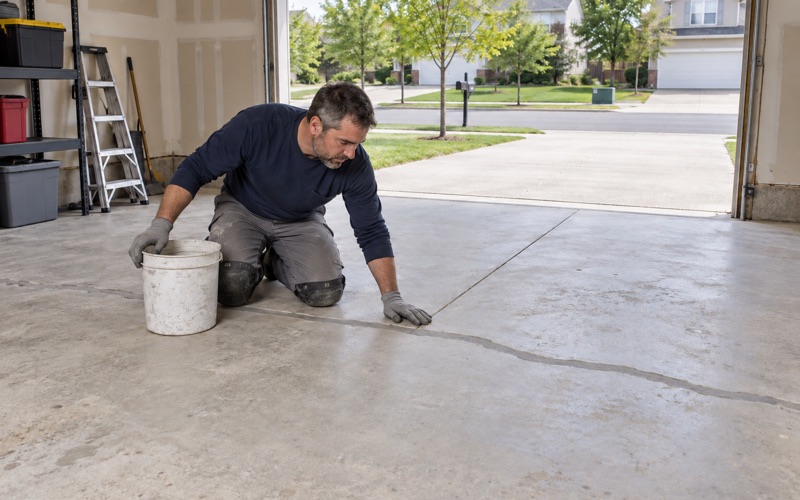
Empty also means the slab can be read honestly. Cracks, joints, oil soaks and old coating hide under boxes and tool chests, and we look at all of them before the price is final. When a crack or a failing patch means the concrete needs repair or replacement before it can take a coating, we say so then, not after the boxes are already gone.
Shelving, workbenches and the second freezer
Freestanding shelving comes out along with its contents. Wall-mounted cabinets that stay up can remain, as long as nothing hangs low enough to block a grinder or a squeegee along the base of the wall. A workbench bolted to the slab needs a decision first: unbolt it and patch the holes, or coat around it and accept a seam at its legs.
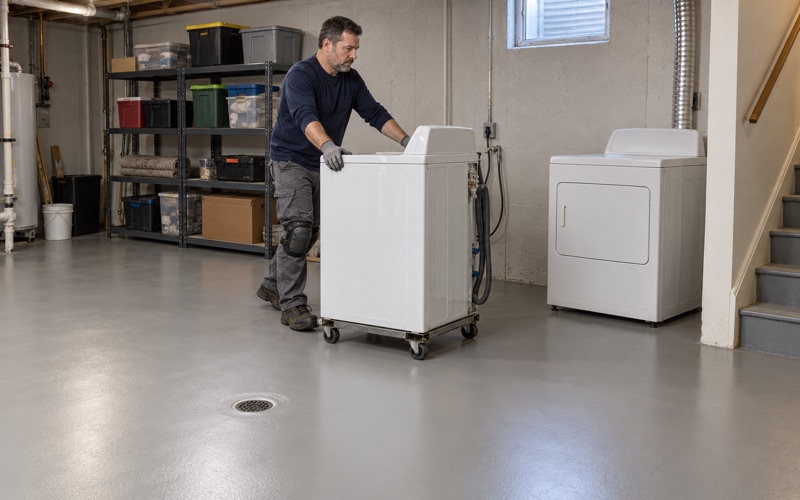
Refrigerators and chest freezers need a temporary home with an outlet. That item catches people out more than any other, because a freezer full of food cannot ride along to a storage unit. A spare outlet in the basement, a kitchen corner or a neighbor’s garage usually covers it for the few days involved, and it is worth settling before move-out day.
Moisture testing and paperwork set the start date
A moisture test needs bare slab to sit on. A plastic sheet test under ASTM D4263 or a calcium chloride kit under ASTM F1869 has to stay undisturbed for its full test period, so the garage is often emptied a day or two before the coating itself begins. Plan the move-out with that lead time included rather than on the morning of the work.
Paperwork runs alongside the testing. The Village of Justice Building Department requires every contractor to be registered with the village and bonded before a permit issues, with a $10,000 permit bond for contractors other than sewer contractors. Illinois issues no flooring license, so we confirm that registration, bond and insurance first, and every home job gets a written contract and the state’s consumer-rights pamphlet before work starts.
Looking for epoxy-flooring closer to La Grange? See Epoxy-Flooring in La Grange.
Three Cure Clocks: Feet, Belongings, Then Vehicle Traffic
Once the last coat is down, three separate clocks start. They run at different speeds and depend on the product we specify, so the proposal names that product and its published times rather than a promise from memory. The figures below come from one widely sold do-it-yourself garage epoxy and serve as a reference point, not a schedule for your garage.
Walking on it
Rust-Oleum lists its EpoxyShield garage kit as ready for foot traffic in about 24 hours. Professional polyaspartic and polyurea systems publish shorter times than that, and a cold garage lengthens every one of them. For most households this is the first milestone that matters: the side door works again, and someone can walk through to look at the finished floor.
Putting shelves and boxes back
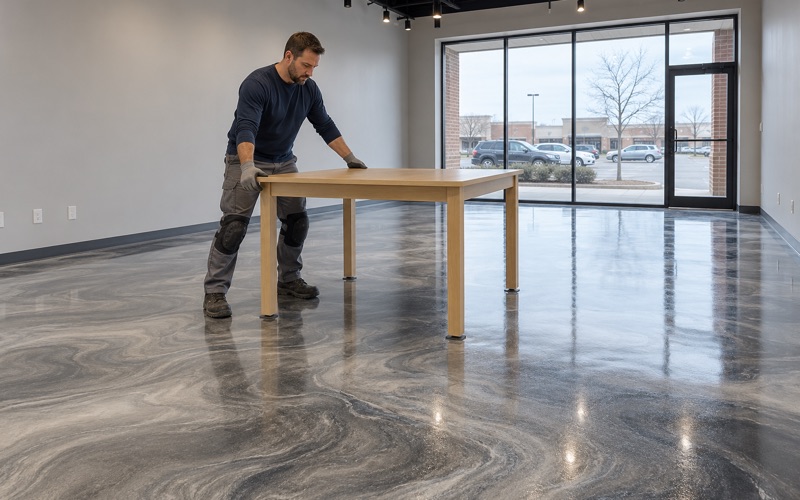
Light foot traffic is not the same thing as load. Rust-Oleum’s European sheet for one EpoxyShield product separates light foot traffic at 16 hours from heavy items at 24 hours, and steel shelving concentrates its weight on very small feet. We give a reloading date based on the system actually installed, and we ask that shelving go back on pads rather than bare steel.
The car comes home last
Vehicle traffic is the long clock. The same retail kit lists about 3 days before a car, the European sheet says 7 days at full hardness, and a cold slab stretches both. Warm tires on a coating that has not fully cured are how hot tire pickup starts, so the car is the one thing that should wait for our call rather than a guess.
That stretch is why a garage’s contents need a real plan. A pile of bins in the driveway is fine for an afternoon, not for most of a week. Counting from move-out day through testing, grinding and coating to the vehicle date tells you how long any storage arrangement has to last, and that is the number to have in hand when you reserve one.
Where the Contents Go: A Storage Unit, a POD or Next Door
A storage unit on 83rd Street
Justice has a self-storage facility inside the village: Public Storage at 8550 West 83rd Street, in the Lyons Township part of Cook County. Its own page lists indoor and outdoor units in small, medium and large sizes, with drive-up access on outdoor rollup units and access every day. We have no relationship with the company; it is simply the nearest option many homeowners here will look at.
Drive-up access matters for a garage move because the contents are heavy and awkward: a rolling toolbox, a snowblower, bins of holiday decorations. The facility also lists car storage, with spaces up to 20 feet suitable for a car, uncovered or enclosed. The operator’s guidance limits that to an operating, registered and insured vehicle in an approved space, and the rental agreement is what governs.
A POD in the driveway
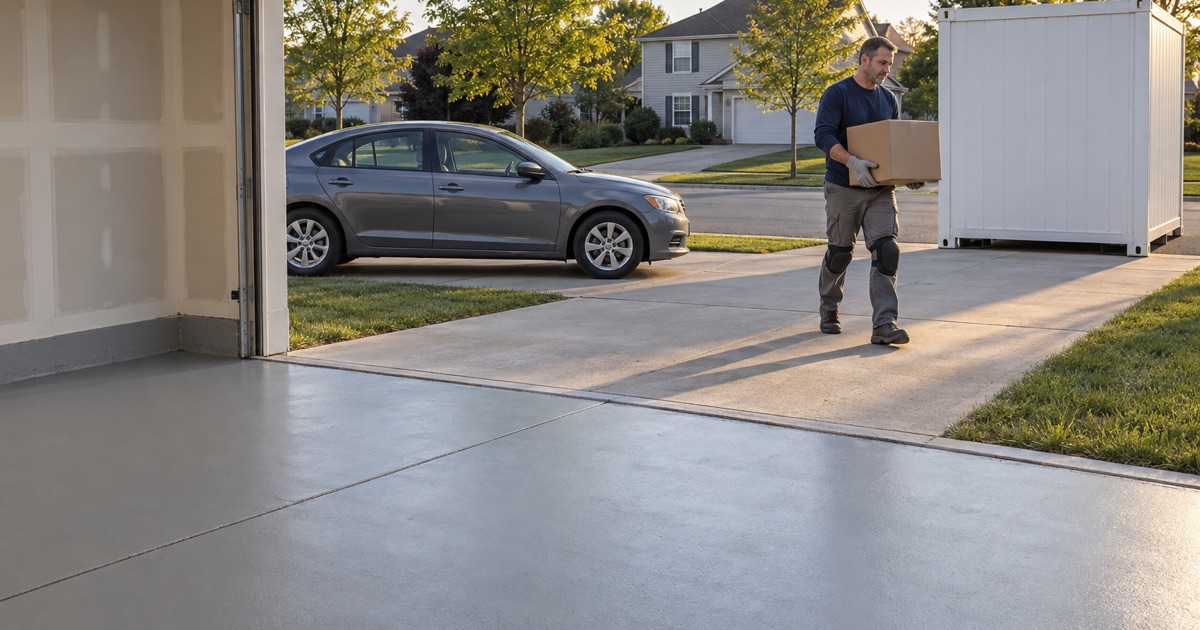
A portable container in the driveway keeps everything a few steps from the garage, which suits a short job. In Justice that container is a regulated item: the municipal code has an article on storage of cargo containers and PODS, with Section 5-292 covering POD permits, and the village board took up an amendment to it in April 2026.
We have not read the permit’s terms, fees or time limits, so we will not quote them; the village is the place to ask before one is delivered. We do not supply or arrange containers either. What we can give you is the window a container has to cover, from move-out through the vehicle date, so the permit request matches the job.
A neighbor’s garage or a spare room
For a smaller garage the simplest answer is often next door. A neighbor’s spare bay for a few days, a basement corner or a covered porch can hold the bins and hand tools, and the car can sit in the driveway. Mixing options is common: bulky furniture goes to a rented unit while the tools you use daily stay close to the house.
What a Storage Unit Will Not Take, and Moving Back In
Fuel, propane, paint and solvents
The items garages hold most are the ones storage facilities refuse. Public Storage’s own guidance says not to store hazardous materials, flammable items, explosives, or items that release fumes. Operator pages commonly name gasoline, propane tanks, paint thinners, acetone, bleach, turpentine, fertilizers and pesticides, and advise draining fuel from mowers and generators according to the facility’s rules.
So the gas cans, the grill’s propane tank, half-used paint, thinners, pool chemicals and lawn products need their own plan, separate from the boxes. A ventilated detached shed is the usual answer. Do not tuck a fuel can into a packed carton to save a trip; a closed unit full of household goods is exactly the wrong place for fumes, which is why the rule exists.
What is not worth keeping
Clearing a garage for a coating is a natural moment to stop storing what will never be used. Old stain, dried-out paint, a years-old jug of weed killer and unlabeled solvents can go to a household hazardous-waste collection rather than back onto the new floor. Look up the current collection options for Cook County residents before move-out day so the timing lines up.
Cans that do stay should come back in a tray or on a shelf, not straight onto the floor. A drip of thinner or a ring of spilled fuel wipes off a plastic tray far more easily than off a coating, and the tray keeps a rusty can bottom from leaving a stain on a light-colored flake finish.
Putting the garage back so the floor stays clean
Moving back in is the first real test of the new surface. Sweep before carrying anything in, since grit dragged under a heavy tool chest scratches even a hard topcoat. Lift rather than drag the mower and snowblower, set pads under shelving feet, and park the car only once the date we gave you has passed.
Winter is the second test. Our garage systems are built for the calcium chloride brine and rock salt a car carries in on its tires, and a squeegee kept by the door clears meltwater before it dries into a white film. A garage reloaded with care, fuel stored outside it and the car parked on schedule is how the floor still looks new years later.
- 20+ Years on Concrete
- Moisture Tested Before Quoting
- Per-Square-Foot Written Quotes