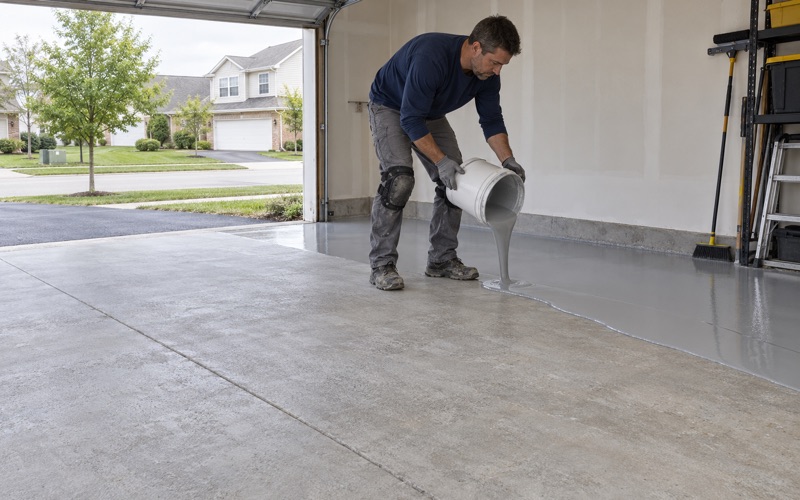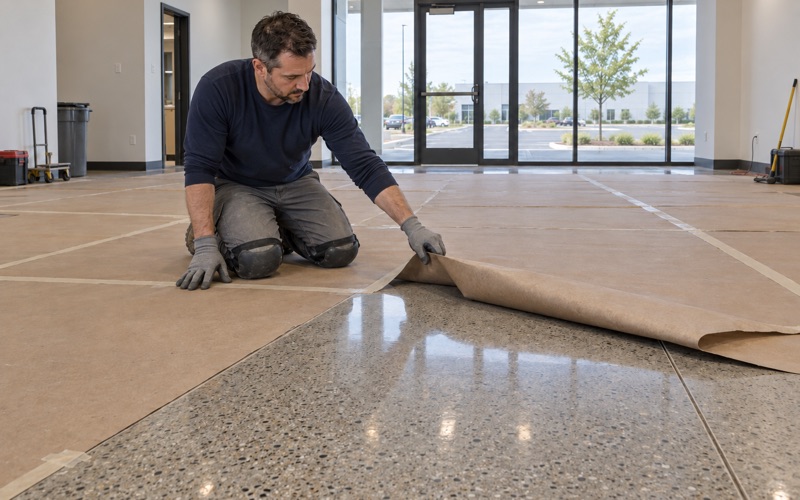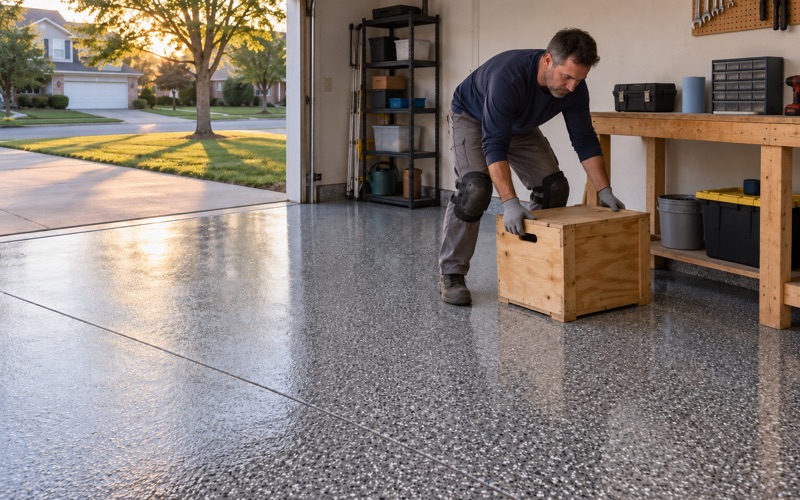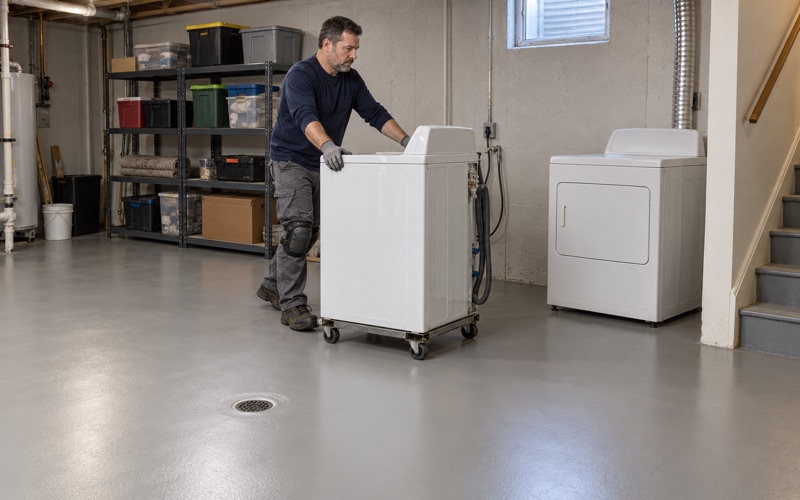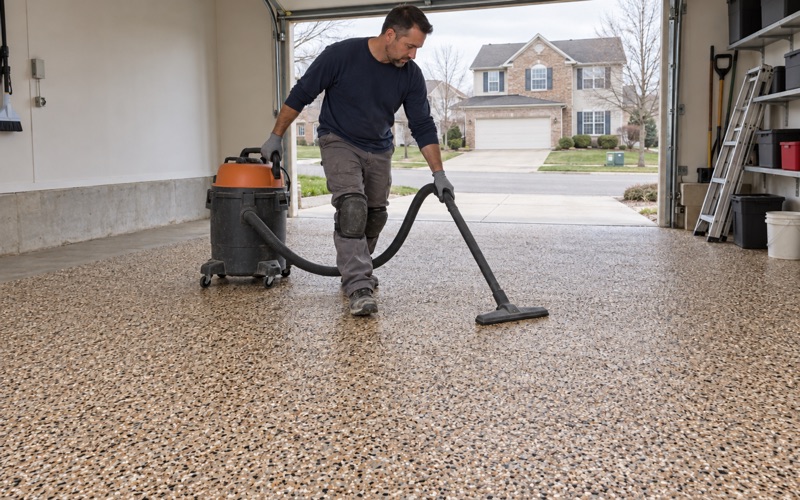
Romeoville Epoxy Flooring brings more than 20 years of epoxy flooring work to Hinsdale, and much of it involves floors that have to look the same years apart. A flake floor is rarely one project. It is a garage this year, a mudroom next spring and a basement after that, and the owner expects the third room to read like the first.
That expectation shapes how we plan the work. We record the flake blend, the resin and the system build on the proposal, so the next room can be quoted against the last one rather than against memory. The proposal also names the finished thickness, which lets anyone check what was quoted against what actually went down on the slab.
Temperature shapes the calendar as much as color does. A broadcast flake system has a minimum application temperature and a cure that slows as the concrete cools, so we schedule against slab temperature rather than the date on a contract. When a cold space has to wait, we say so before the job is booked, not after the first coat is down.
How Hinsdale’s Park Restrooms Are Getting One Floor, Site by Site
Veeck Park and the “consistent with” standard
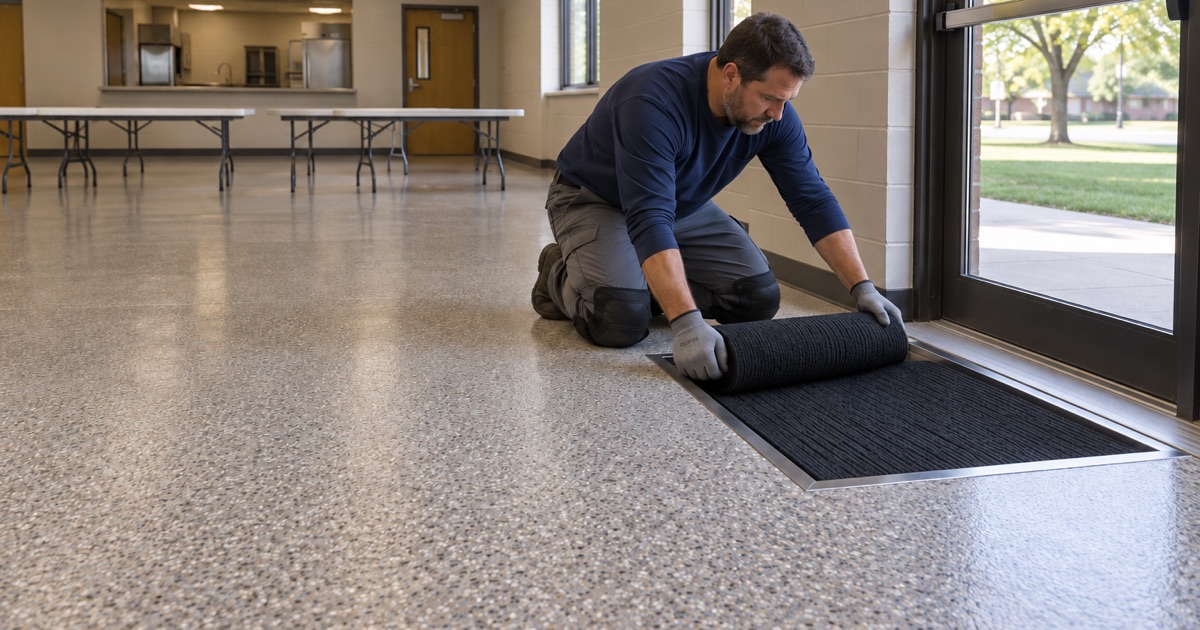
The clearest local example of a floor bought as a program sits in Hinsdale’s own parks. A Parks and Recreation staff report in the May 20, 2025 commission packet records that both bathrooms at Veeck Park, 701 E. Chicago Ave., received new epoxy flake flooring, “consistent with recent updates at the KLM Annex and Brook Park bathrooms.”
The report credits the new floor with “a cleaner appearance and enhanced durability,” and its photo shows a gray-green full-flake floor in a block-walled restroom with partitions and urinals. The installer, the product and the cost were not published. We had no part in that work; it is simply a public record of how a buyer standardizes a floor.
Six sites, 12 bathrooms, one finish
The same report lists six bathroom shelter sites holding 12 bathrooms. In March 2025 all 12 were cleaned and stocked ahead of an April opening, and a bid contract for weekend and holiday garbage service includes weekend maintenance of the park bathrooms. A floor in that setting is cleaned by a contracted crew on a rotating schedule, not by the person who chose it.
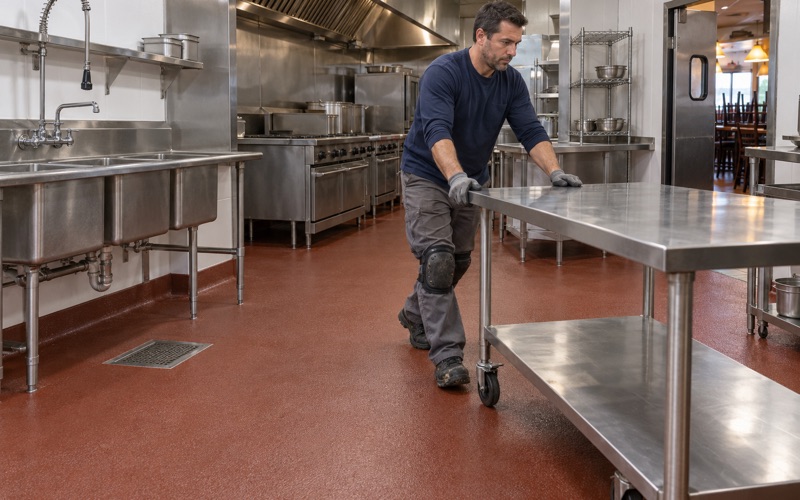
That is the argument for full flake in a small public building. The broadcast hides tracked grit between cleanings, the seal coat gives a crew one continuous surface to mop, and a concrete block room with partitions has few places for a seam to open. The decision is made once, then repeated building by building as budgets allow.
Why the lodge floor is not resin
The packet also shows where the resin stops. KLM Lodge got luxury vinyl plank in February 2025, replacing its carpet, with the Hinsdale Historical Society helping keep its historical look. Within one park system, the restrooms carry flake and the rental lodge carries plank, which is the right instinct: a floor matched to the room’s job, not to one catalog.
For a homeowner the lesson carries straight over. A garage, a mudroom and a basement can share one flake floor, but a finished family room may not want resin at all. We would rather say that while walking the house than sell a single system for every slab under the roof.
Looking for epoxy-flooring closer to Palos Hills? See Epoxy-Flooring in Palos Hills.
The Off-Season Window and Why 50 Degrees Sets the Calendar
Working backward from an April opening
A seasonal building has a hard deadline built into it. If the restrooms open in April and are cleaned and stocked in March, the floor has to be down, cured and walkable before the stocking crew arrives. That puts the coating work in late winter, the coldest stretch of the year, which is exactly when a resin floor is slowest to cure.
Whether Hinsdale’s park restrooms are heated in that window was not published, and it changes everything. A building that can be held warm through the cure is an ordinary job. One that cannot is a scheduling problem, and the honest answer is sometimes that the floor moves to the next off-season rather than going down cold.
What a flake system’s data sheet actually says
Manufacturers publish the limits plainly. One example, Sika’s data sheet for its DecoDur ES-26 Flake system, sets a minimum ambient temperature of 50 degrees, a maximum relative humidity of 80 percent and protection from damp, condensation and water for at least 24 hours. We cite it as an example of how flake systems are specified, not as what Hinsdale used.
The cure figures are the part an owner feels. The same sheet puts the seal coat ready for foot traffic in about 48 hours at 50 degrees against about 30 at 68, and full cure at about 10 days at 50 degrees against about 7 at 68. A building held at the minimum gives up roughly three extra days before it can take full service.
Slab temperature, not air temperature
Air temperature is the number on the thermostat, but resin cures at the temperature of the concrete. A slab that sat through January holds its cold long after a heater warms the room, and the floor near an exterior door runs colder still. We read the slab itself before mixing, and we schedule the full cure, not just the walk-on time, against the opening date.
This is also why a quote for a seasonal building names both dates. The install date tells the owner when the room closes, and the full-cure date tells them when a cleaning crew with a scrubber and disinfectant can treat the floor as finished. Booking the opening against the first date is how a new floor picks up its first scuffs too early.
Matching the Fourth Building to the First
Flake blend is a recipe, not a color name
A gray-green flake floor is not one color; it is a blend of several chip colors in set proportions, broadcast to refusal and sealed. Two blends with the same catalog name from different production runs can read differently under a restroom’s lighting. When a buyer asks for a floor consistent with the last three, the blend has to be recorded as precisely as the resin.
We write the blend name, chip size and broadcast rate onto the proposal along with the base coat and seal coat. The next job starts from that record. Without it, the fourth room gets matched by eye against a photo, and a photo taken under fluorescent light is not a reliable reference for anyone.
Same control batch numbers
Resin color shifts slightly from batch to batch as well. Sika’s sheet is blunt about it: for exact color matching, every product in an area comes from the same control batch numbers. Within one room that is easy to manage. Across buildings coated a year apart it is not, because last year’s batch is long gone.
The practical answer is to buy enough of one batch for the rooms planned in a single season, within the product’s shelf life, and note the batch numbers on the job record. Where a later room must use a new batch, a test panel laid beside the existing floor shows the difference before it is installed rather than after.
Prep has to match too
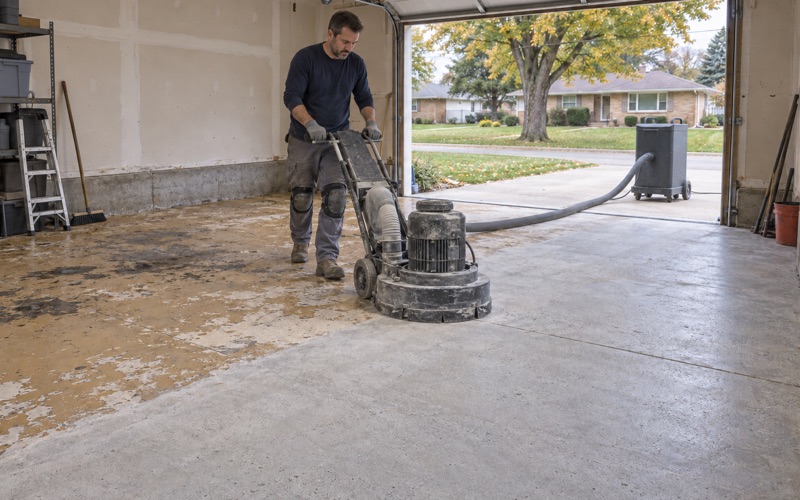
A matched look also depends on matched texture. Every slab we coat is opened with a diamond grinder or shot blaster to a consistent surface profile, never acid etched, so the base coat wets out the same way in each room. Uneven prep shows through a flake floor as patches that hold more or less chip, and no color record fixes that.
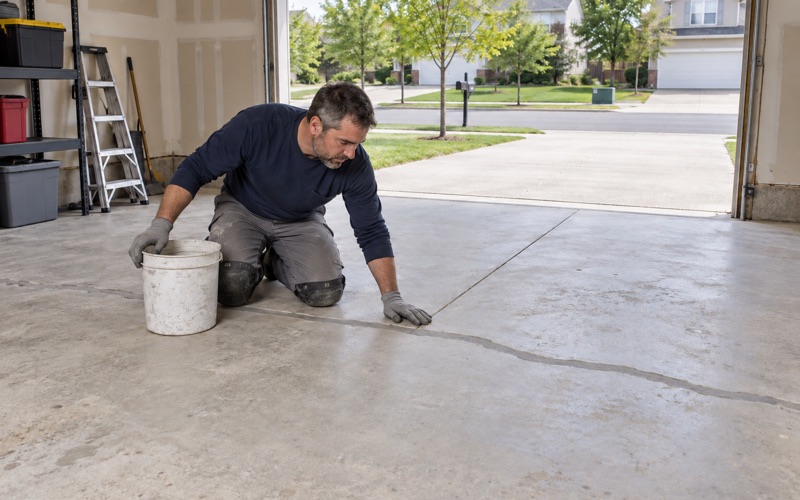
Cracks and joints need the same consistency. We read them before quoting and say plainly when a slab needs repair first, and repairs are filled and ground flush so they do not telegraph through the broadcast in one room and not the next. Where a slab needs more than a coating can give, the proposal says so in writing.
The Same Floor in a Hinsdale Garage or Mudroom
Owner-occupied homes, one room at a time
The park program is a public version of what homeowners do privately. Hinsdale is 89.9 percent owner-occupied, and an owner who coats the garage often comes back for a mudroom or basement once the first floor has held up. That second job should look like the first, so we keep the same written record for a house that we would for a building program.
Every home job starts with a written contract and the Home Repair: Know Your Consumer Rights pamphlet, as the Illinois Home Repair and Remodeling Act requires. The contract carries the product, system build and thickness, and warranty exclusions are read aloud first, starting with moisture. Illinois issues no state license for flooring work, so we confirm the village’s own registration, bond and insurance rules before scheduling.
Cold garages wait for spring
A detached or lightly heated garage runs into the same 50-degree floor that governs a seasonal restroom. If the slab cannot be held there through the cure, the honest schedule is spring, and we say so before the deposit rather than after the first cold night. A floor rushed in January is the one that stays soft and marks easily.
Winter is also when a garage takes its hardest wear. Calcium chloride brine and rock salt ride in on the tires, so the system we specify for a garage is built to take that chemistry, with a seal coat chosen for it. Moisture is tested as a line item, using ASTM F1869 or ASTM F2170 probes, before the floor is quoted as final.
Mudrooms and what a coating will not do
Mudrooms see the same grit and meltwater in a smaller room with a door to the outside. A full flake broadcast hides tracked sand between cleanings, much as it does in a park restroom, and a coved edge keeps mop water off the drywall. Grinding dust is collected at the grinder and never washed toward a floor drain.
A flake floor is a wear surface, not waterproofing. In a basement we start with where any water is coming from, sump and drain tile included, before talking about color, and we do not sell a coating as radon reduction, which in Illinois takes a state radon mitigation license. Coatings are chosen within the Illinois VOC limit for architectural coatings.
- 20+ Years on Concrete
- Moisture Tested Before Quoting
- Per-Square-Foot Written Quotes